Sourcing Wheel Bearing Suppliers at China Auto Fairs
Industry news
2026-06-11
Sourcing wheel bearing suppliers at a China auto fair remains one of the most direct paths to factory pricing, but the difference between a productive trip and a wasted booth tour comes down to preparation. As an exhibition insider with over a decade of experience connecting global buyers with Chinese manufacturers, I’ve seen procurement teams leave with a stack of catalogs and no qualified leads, while others walk out with verified supplier shortlists. The gap is a structured sourcing plan that treats the fair as a procurement operation. This guide outlines how to identify the right event, assess wheel bearing manufacturers on the exhibition floor, negotiate real terms, and follow up for long-term supply partnerships.
Which China Auto Fair Has the Right Wheel Bearing Suppliers?
Not every auto parts exhibition in China is a strong fit for wheel bearing sourcing. Some events focus on electronics, others on high-end luxury parts. Your first task is identifying a fair with a concentrated exhibitor base in the chassis and bearing supply chain.
Evaluating a fair starts before you book a flight. Look at past exhibitor profiles. An event that consistently attracts manufacturers from industrial clusters like Yuhuan (Zhejiang) for chassis parts or Shandong for bearings will deliver more options than a generic auto show. Events like the APES Auto Parts Expo Shanghai, for instance, feature dedicated zones for undercarriage components and often include matchmaking programs that connect buyers with pre-qualified wheel bearing suppliers from across China’s manufacturing hubs.
Evaluation Criterion
What to Verify
Industrial cluster participation
Do exhibitors list manufacturing bases in bearing-producing regions like Shandong, Zhejiang, or Jiangsu?
Exhibitor background
Are booth staff able to discuss heat treatment and grinding processes, or only pricing?
Past international buyer attendance
Request post-show reports or data on buyer geography and purchasing categories.
Sector-specific zones
Does the floorplan show a chassis, transmission, or wheel-end components area?
Matchmaking services
Can the organizer pre-arrange meetings with bearing suppliers matching your technical requirements?
A fair that passes all five checks sets the stage for real supplier engagement, not just catalog collection.
How to Prepare Before You Step into the Fair
The most effective buyers arrive with a shortlist, not an empty bag for brochures. Download the exhibitor list as soon as it’s published — usually two to three months before the event. Filter by product category: wheel hub assemblies, front and rear wheel bearings, tapered roller bearings, and bearing kits. Send preliminary emails introducing your company and specifying the bearing type (ball, tapered roller, hub unit) and approximate annual volume. This sets the expectation that you’re a serious buyer, and the supplier will have relevant samples and pricing ready.
Research each target supplier’s certifications. At minimum, look for IATF 16949, the automotive quality management system standard that replaces ISO/TS 16949. A factory holding this certification has documented processes for traceability, risk management, and defect prevention. Ask for material specifications: most wheel bearings use GCr15 bearing steel with controlled heat treatment. A good manufacturer can provide hardness values (typically HRC 60-64) and microstructure data.
Preparation also includes practical logistics. Arrange accommodation near the venue to maximize your time on the floor. Set a clear daily schedule of at least four to six targeted booth visits. Bring calipers or a pocket microscope if you intend to inspect samples on the spot. The trade fair is a concentrated three-day opportunity; every hour spent walking aimlessly is a meeting missed.
What to Inspect at a Wheel Bearing Supplier’s Booth
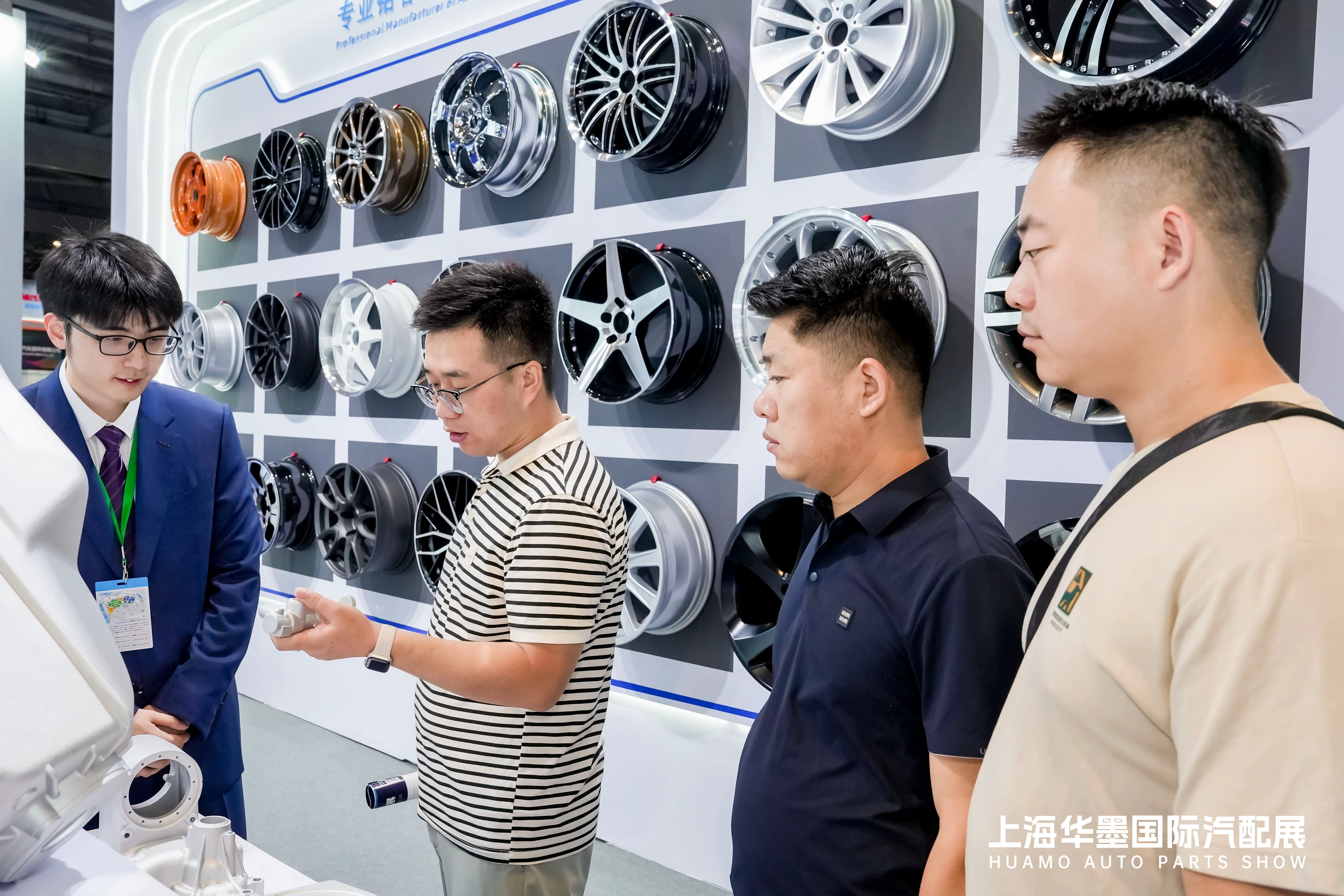
At the booth, don’t just browse. Pick up a sample. Check the packaging — moisture-resistant wrapping and anti-rust coating indicate professional handling. Look at the bearing itself: the raceway surface should be mirror-smooth with no visible pitting. For hub bearings, ask how the ABS sensor ring is integrated and what cleanliness standard the assembly line meets.
Ask the exhibitor to show you their production line video on their phone. A genuine manufacturer will have footage of turning, heat treatment, grinding, and assembly—each step with identifiable machinery and in-process checks. If they can’t produce a video with recognizable equipment, they may be sourcing from another factory.
Request a test report for noise and vibration (BVT-1 or equivalent). Inquire about the ABEC rating; for automotive wheel bearings, ABEC-3 to ABEC-5 is common, but verify against your specification. Ask about grease: the type (lithium-based, polyurea) and fill percentage. A supplier that can discuss grease bleed characteristics and seal lip design is not just moving boxes.
I’ve seen experienced buyers ask one question that separates manufacturers from traders: “How do you control radial clearance after mounting?” A manufacturer that explains their C1/C2/C3 clearance options and how they measure it on the line is one that knows the product.
If your program requires bearings for high-speed or high-temperature applications, confirm the supplier’s testing capabilities and life-cycle data before committing. Our team can help connect you with specialized manufacturers at upcoming fairs. Reach out at apeschina@huamogroup.com.
How to Negotiate Better Terms at the Trade Show
Trade fair negotiations are different from email exchanges. The supplier has invested in booth construction, travel, and sample shipping. They face hundreds of competitors in the same hall. Use this context to your advantage.
Many wheel bearing suppliers will lower their minimum order quantity (MOQ) for show orders, especially if you agree to a trial order with payment terms like 30% deposit, 70% against shipment or against copy of documents. Press for FOB Shanghai or FOB Ningbo prices and ask for unit price breaks at 1,000, 5,000, and 10,000 pieces. Compare the spread across three booths; if one supplier drops sharply at 5,000 units while another plateaus, you’ve found a cost structure difference worth exploring.
Sample orders during the fair are common. Some manufacturers offer free samples if you pay for shipping. Clarify customization costs upfront: private labeling, specific packaging, or branded boxes add a tooling charge. Get all offers in writing, preferably on their company letterhead, before leaving the booth.
Collect name cards from multiple suppliers and mention that you’re comparing a few key offers. This signals competition without being aggressive, and often tightens the final quote. A trade show is the rare moment when you hold the negotiation leverage of proximity and time pressure.
How to Follow Up After the Fair to Secure Suppliers
Most buyers collect dozens of brochures and then let them gather dust. The week after the fair is critical. Send a follow-up email referencing your booth conversation and attach a photo of the product sample you handled. This step instantly re-establishes context and shows you’re organized.
Request a formal quotation with lead time, payment terms, and a detailed specification sheet that includes material grade, heat treatment, and tolerance class. If possible, arrange a factory visit soon after the fair. A post-fair tour often reveals the true production capacity. I’ve been on visits where the supplier claimed in-house grinding, only to show a facility that outsourced that entire step. Cross-check the claims you heard at the booth.
Build a shortlist of two to three qualified suppliers and maintain consistent communication. Long-term supply partnerships start with reliable sampling and delivery performance. That first exhibition meeting opens the door; professional follow-up walks through it.
Start Your Wheel Bearing Sourcing at a Structured Trade Fair
Finding reliable wheel bearing suppliers from overseas involves risk: inconsistent quality, unclear communication, long qualification cycles. A well-structured trade fair eliminates many of these variables by letting you inspect products, meet technical teams, and compare manufacturers side-by-side in a single trip.
At APES Auto Parts Expo Shanghai, we connect international buyers with pre-verified wheel bearing manufacturers from China’s key automotive clusters. Our matchmaking program helps you schedule meetings and access exhibitor product data before the event, so every hour on the floor is productive.
To join our next edition as a professional buyer, email your part number, annual purchase volume, and specific quality requirements to apeschina@huamogroup.com, or call +021-60280788. Our sourcing team will identify the right exhibitors and arrange on-site introductions.
Questions Buyers Ask About Wheel Bearing Sourcing at China Fairs
How do I know if a wheel bearing supplier at a Chinese fair is the actual manufacturer?
Ask for production line videos, factory address, and whether their booth location matches their home industrial cluster. A manufacturer can show you specific machinery and talk about tolerance control. A trading company will share polished catalog photos but avoid discussing heat treatment or grinding details. If the booth staff can’t answer technical questions without calling someone, you’re likely speaking with an intermediary.
Can I get small sample orders at the fair?
It depends on the supplier. Most manufacturers provide paid samples, with shipping costs covered by the buyer. Some offer free samples if you present clear annual volumes and a serious purchase profile. Always collect an official quotation alongside the samples. Without that quotation, the sample conversation rarely translates into a production order later.
What certification should I request for automotive wheel bearings?
IATF 16949 is the baseline for automotive quality management systems. Beyond that, request material certification confirming GCr15 steel composition, along with testing reports for hardness (HRC 60-64 typical) and noise level. Do not accept a supplier telling you “we follow OE standards” without seeing the actual test data. Consistent documentation is what separates a qualified bearing manufacturer from a general parts supplier.
What should I do if I find a supplier I like but need time to decide?
In programs we’ve supported, buyers who follow up within one week and send a detailed specification sheet are remembered and prioritized. Reference the booth conversation, attach a product photo, and request formal documents. The fair creates momentum; use the two-week window after the event to lock in trial order terms while interest and context are fresh. Leveraging the exhibition’s buyer program before the event can shorten that decision work. Contact apeschina@huamogroup.com with your wheel bearing specifications to start.
If you’re interested, check out these related articles: