Steering Knuckle Exhibition China: How Manufacturers Connect With Global Buyers
Industry news
2026-06-12
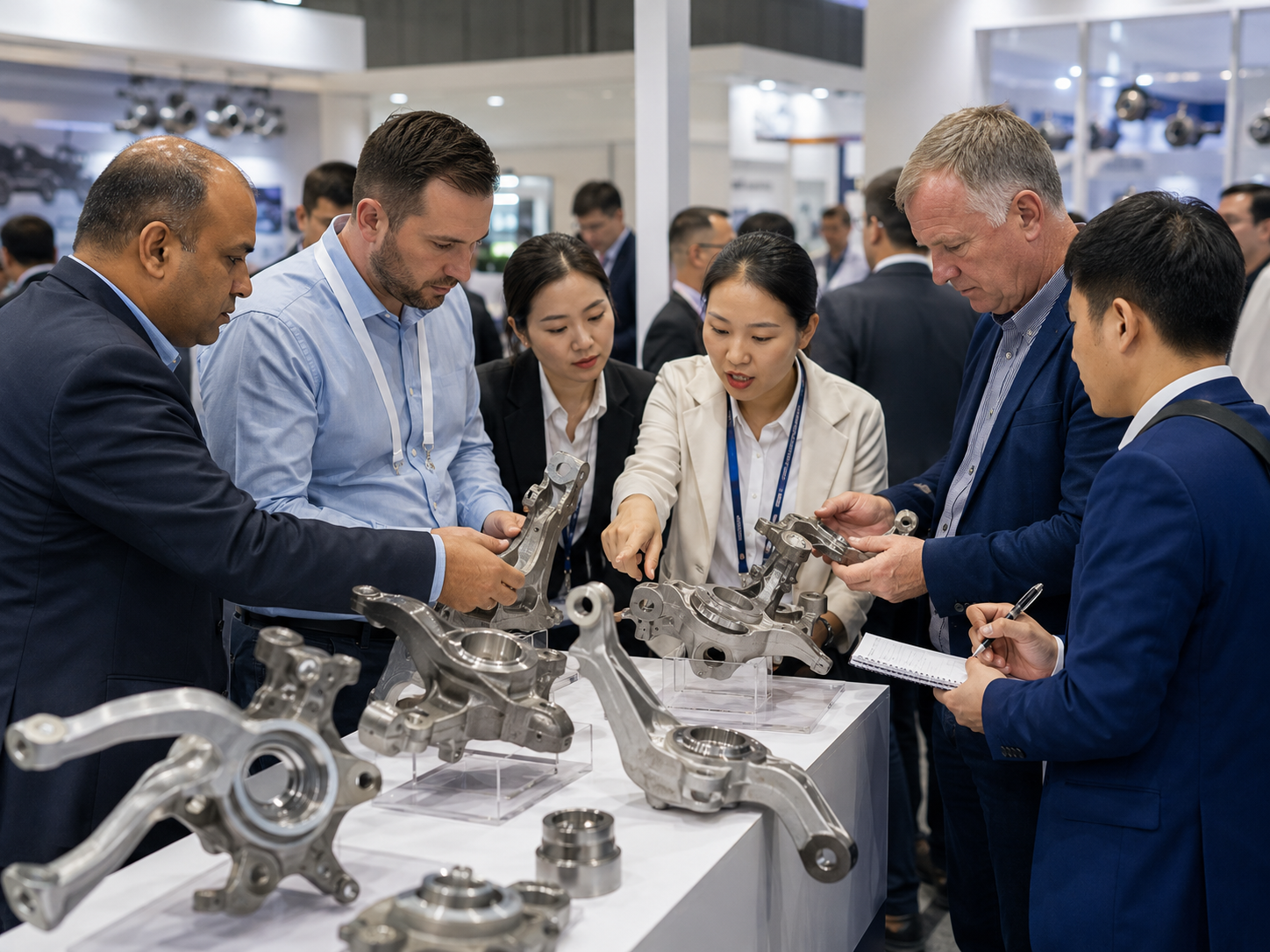
Many steering knuckle manufacturers in China produce components that meet OEM and aftermarket specifications, but even high-quality production doesn’t automatically translate into export orders. The disconnect is that overseas buyers—procurement managers, tier-1 supplier representatives, and distributor sourcing teams—need to physically inspect forging quality, dimensional accuracy, and surface treatment before committing to a purchasing program. A China-based auto parts exhibition remains one of the few channels where these two sides meet face-to-face, with the component on the table. This article outlines what a steering knuckle manufacturer should look for in an exhibition, how to evaluate buyer attendance by region, and what makes a booth investment pay off in concrete inquiry terms.
What Kinds of Buyers Attend Steering Knuckle Exhibitions in China
Buyer profiles at a steering knuckle China exhibition typically fall into three practical categories. The first group consists of aftermarket distributors and wholesalers from the Middle East, Southeast Asia, Africa, and South America—buyers who need consistent supply of steering knuckles for popular vehicle platforms like Toyota Hilux, Ford Ranger, Hyundai Porter, or Mitsubishi L200. These buyers evaluate samples on-site, negotiate MOQ and packaging specifications, and often finalize trial orders during the show. The second group includes European and North American tier-2 or tier-3 suppliers looking for forging and machining partners to fill specific OE service parts programs. Their questions are more technical: material certifications, fatigue test reports, PPAP level 3 readiness, and IATF 16949 audit status. The third group, and one that many manufacturers underestimate, is the domestic Chinese export trader who represents a cluster of overseas clients; they attend exhibitions to find new factory partners for categories they don’t yet cover. The key takeaway is that a steering knuckle manufacturer’s booth needs to be ready for all three, which means having spec sheets, certification folders, and physical cutaway samples of the knuckle’s internal grain flow.
At a large-scale sourcing event like the APES auto parts expo Shanghai, which regularly draws over 35,000 registered buyers from more than 100 countries, the mix is particularly strong for chassis and steering components because these are high-wear parts that buyers prefer to inspect in person rather than order on a screen. In past editions, we have seen a single steering knuckle exhibitor walk away with 40–50 qualified buyer contacts across South America, the Middle East, and Southeast Asia within three days—this is not a theoretical sales funnel but a documented pattern when the product category aligns with the buyer attendance profile.
How to Evaluate an Exhibition Before Booking a Booth
Not every China auto parts trade show delivers meaningful inquiries for a steering knuckle manufacturer. The evaluation should start with the buyer list, not the booth price. First, request the previous edition’s buyer country breakdown. A show with 60% domestic Chinese visitors and only a handful of international procurement professionals will not generate export orders for a steering knuckle supplier aiming to sell to overseas markets. Second, check whether the exhibition’s industry zoning places steering and chassis parts in a dedicated hall or mixes them randomly with interior accessories and electronics. A dedicated chassis hall—like the Chassis & Suspension Zone at CHN MECH Expo—clusters relevant buyers together and increases walk-up traffic from visitors who specifically deal with steering components. Third, ask how many of the registered buyers are tagged with the “purchasing authority” indicator, because if the visitor is an engineer without budget approval, the conversation rarely converts to a PO.
A practical comparison: exhibitions in Shanghai tend to pull a more internationally diverse buyer base than regional shows in smaller cities, partly because of direct international flights and visa convenience. A steering knuckle manufacturer Yuhuan-based or Ruian-based might be tempted by lower booth costs at a provincial show, but if the overseas buyer density is half of what a Shanghai event offers, the cost per qualified lead may actually be higher.
Factor to Check
What to Ask the Organizer
Why It Matters for Steering Knuckle Export
International buyer percentage
Share of visitors from outside China, and top 10 countries
Determines whether you’ll meet Middle Eastern, South American, or African buyers
Industry zone placement
Whether chassis and steering components have a dedicated hall
Affects the quality of walk-in traffic; mixed halls dilute relevance
Buyer authority level
How many registrants hold purchasing or sourcing roles
Directly correlates with inquiry-to-order conversion
Previous edition exhibitor retention
Percentage of exhibitors who rebook for the next edition
Indicates whether the show delivers ROI for participants
A steering knuckle manufacturer should also check whether the organizer provides interpreter support for your booth personnel, because even a technically excellent engineer who can’t communicate forging tolerances in English or Spanish will lose the buyer’s attention within the first two minutes. Some exhibitions, including APES, offer exhibitor services that pair booth staff with technical translators familiar with chassis component terminology, which makes a measurable difference when you’re explaining grain flow vs. casting porosity to a procurement engineer from São Paulo.
What Booth Formats Work for Steering Knuckle Manufacturers
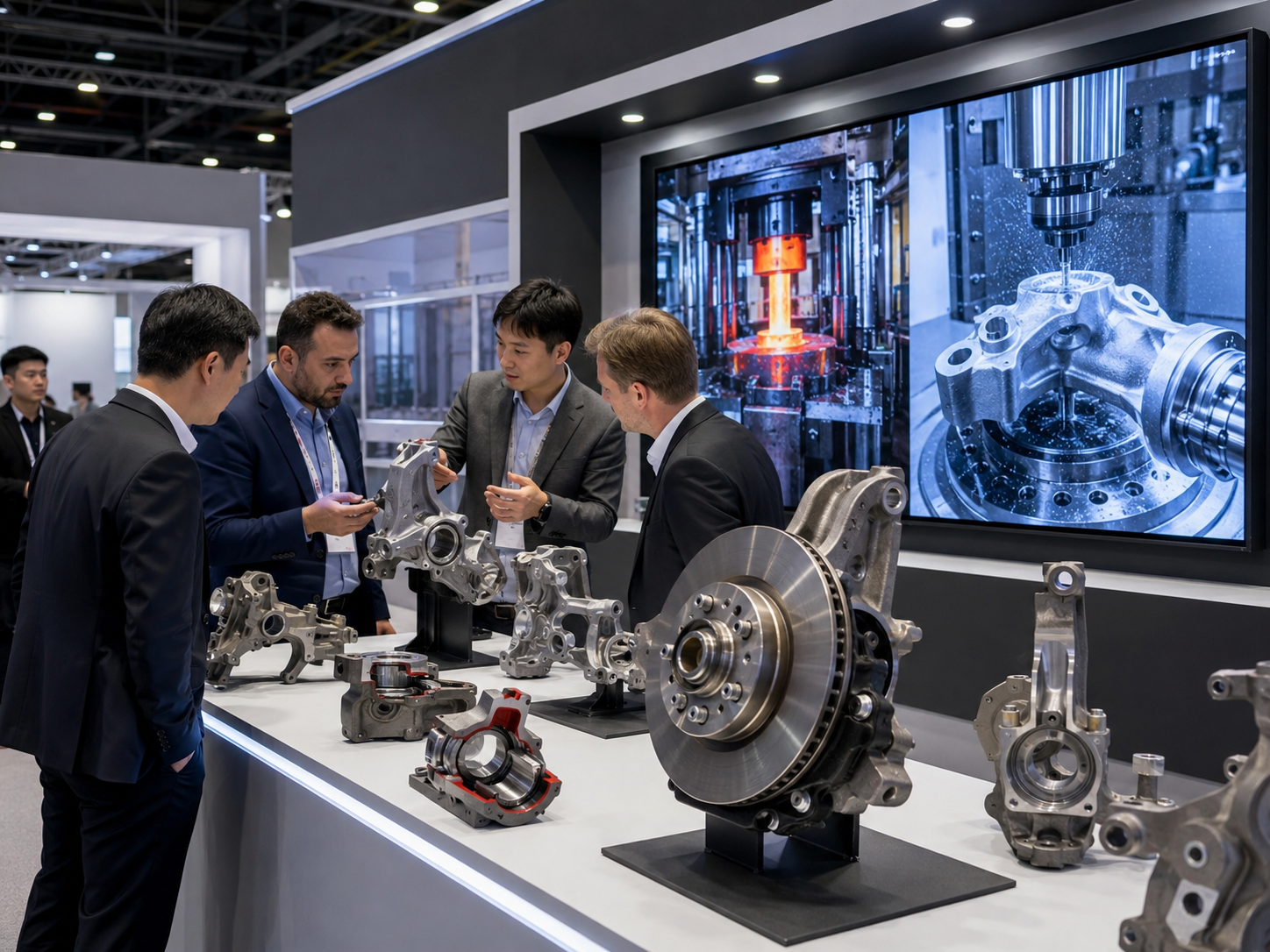
The booth format directly affects how a buyer perceives manufacturing capability. A standard shell scheme booth with a roll-up banner and a few sample steering knuckles on a table is rarely enough to stop a professional buyer walking the aisle. What works for chassis component exhibitors is a raw space booth that allows you to display at least one assembled steering knuckle with hub bearing and brake disc mounted, so the buyer sees not just the forging but also the machining precision on the bearing seat, the ABS sensor mounting surface, and the brake caliper ear position—details that a photograph can’t communicate.
I have observed that steering knuckle manufacturers who bring cutaway samples showing internal forging grain flow structure receive significantly more technical discussions at the booth, because that one sample answers the buyer’s implicit question about whether the factory understands fatigue failure modes. If your booth also includes a monitor looping a 60-second video of the forging press in operation and the CNC machining of the bearing bore, you give the buyer confidence without saying a word. This matters especially for steering knuckles, which are safety-critical components—the buyer needs to trust that the forging process is consistent and the machining tolerances are held across production batches, not just on a first-article inspection report.
The shell scheme booth, which includes basic walls, carpet, fascia board with company name, and lighting, works well for a first-time exhibitor testing the market, but you need to plan the visual layout carefully: place one steering knuckle at eye level near the aisle edge, position certificates (IATF 16949, ISO 9001, any OEM-specific approvals) on the back wall at readable height, and ensure that your product catalog lists part numbers cross-referenced to OEM numbers and vehicle applications. A buyer who can quickly confirm that you produce the steering knuckle for a 2015–2022 Toyota Hilux will stop; a buyer who has to ask is already walking to the next booth.
What Buyers Ask Before They Order
After visiting hundreds of booths across multiple APES editions, I can summarize the four questions that consistently determine whether a steering knuckle inquiry turns into a trial order.
First, “Which vehicle applications and OEM part numbers do you cover?” The buyer doesn’t want to hear that you make “Japanese and European steering knuckles”; they want a spreadsheet or catalog that maps your internal part numbers to Toyota, Mitsubishi, Ford, Hyundai, and other platform-specific OEM references. Second, “What’s your typical MOQ and lead time for a 20-foot container?” Steering knuckles are heavy and bulky, so container loading patterns matter. A manufacturer that can explain how many units fit in a 20GP versus 40HQ container, and how that affects unit freight cost, immediately sounds more experienced than one that guesses. Third, “Can you provide PPAP documentation and material certifications?” This question separates suppliers who have export experience from those who don’t. A clear answer with sample documentation available at the booth builds trust. Fourth, “What surface coating or anti-corrosion treatment do you apply, and can you customize it?” For aftermarket buyers in humid climates, this is a make-or-break specification.
If you are exhibiting at a China auto parts trade show and haven’t prepared clear answers to these four questions with supporting documentation at the booth, the buyer interaction will stall before you get to pricing.
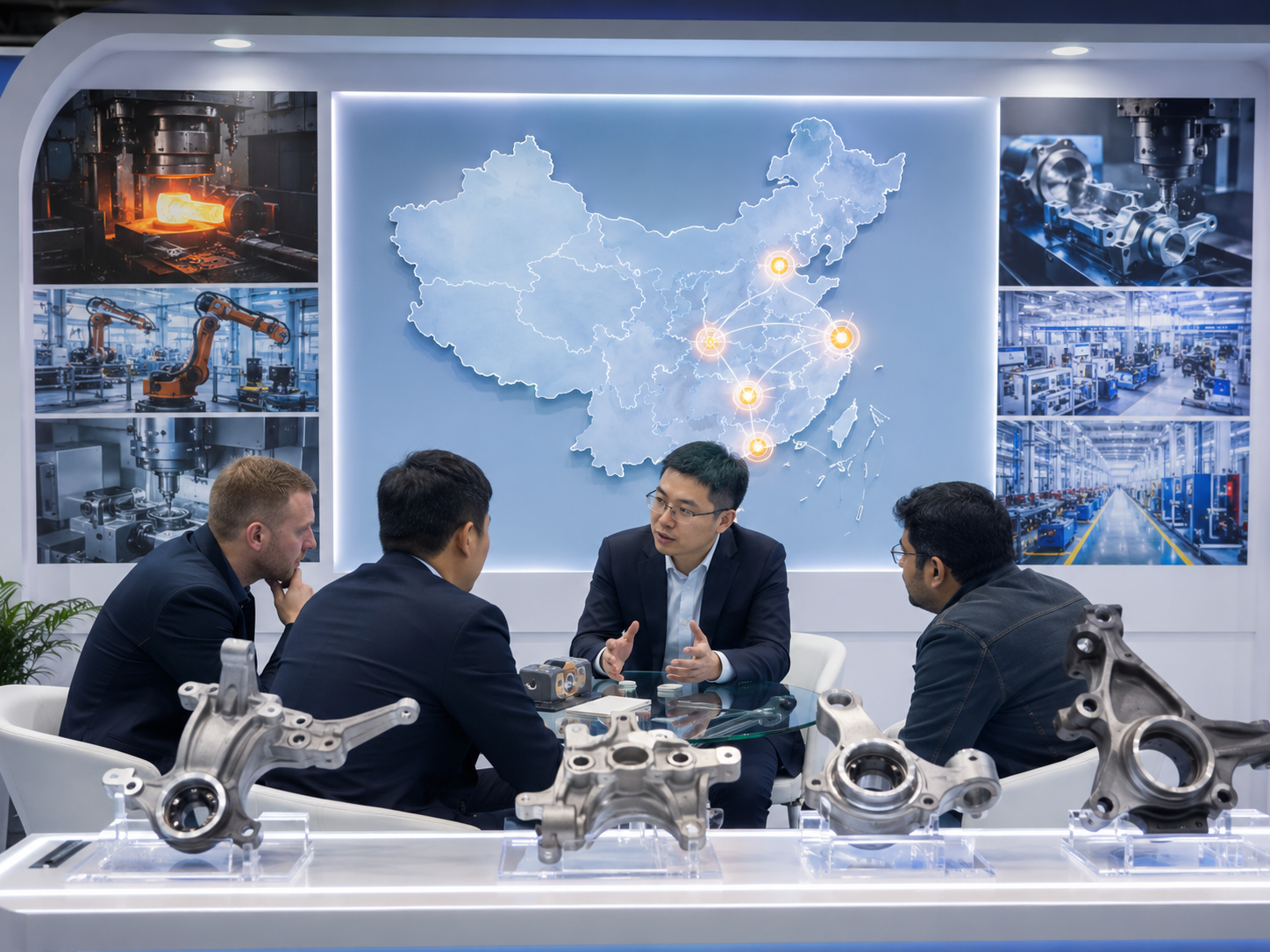
Many professional buyers at international exhibitions factor the manufacturer’s geographic base into their sourcing decision. Chinese industrial clusters for chassis components are not uniformly strong in every category. Yuhuan in Zhejiang is widely recognized for chassis and steering parts, with an ecosystem of forging shops, machining workshops, and surface treatment facilities that supports steering knuckle production from billet to finished, packaged component. When a buyer sees a Yuhuan-based steering knuckle manufacturer at an exhibition, the cluster’s reputation adds a layer of baseline trust—they assume the supplier has access to the right sub-processes and logistics. Similarly, Ruian is known for braking and chassis components, and Shiyan for heavy-duty commercial vehicle parts.
This cluster effect means that a steering knuckle manufacturer should actively highlight its industrial base in booth materials and conversation. A simple line like “Based in Yuhuan, Zhejiang—China’s largest chassis parts manufacturing cluster” gives the buyer a geographic anchor that connects to their own purchasing experience. At APES exhibitions, we have organized dedicated industrial cluster pavilions for Yuhuan chassis parts, Ruian brake systems, and other specialized regions, precisely because we know that buyers navigate exhibitions by cluster as much as by individual company name. A steering knuckle manufacturer exhibiting within such a zone benefits from the collective draw of the region’s reputation.
If your company is located outside the main clusters but still produces quality components, it’s even more important to address this at the booth with third-party certifications and clearly documented quality control processes, since the buyer won’t have the cluster reputation as a shortcut for evaluation.
How to Turn Exhibition Inquiries into Orders After the Show
The three days of an exhibition create the initial contact; the follow-up creates the order. I have seen too many manufacturers collect 80 business cards and then send a generic email two weeks later that produces a 2% response rate. For a steering knuckle manufacturer, the effective method is layered and starts before the exhibition ends.
First, within 24 hours of meeting a buyer, send a follow-up email that references a specific conversation point—preferably a technical detail about a particular steering knuckle part number, a surface treatment requirement, or a container loading calculation you discussed at the booth. A message that says “As discussed at the APES booth, the knuckle for Toyota Hilux application requires e-coat with 720-hour salt spray resistance; we can confirm that our standard process meets this and can provide test reports” has a much higher open-and-reply rate than “Nice to meet you at the exhibition.”
Second, include a photo of the steering knuckle sample that the buyer handled at the booth, ideally with a ruler or caliper in the image for scale, so the buyer instantly recalls the physical interaction. Third, offer a no-obligation sample shipment within 10 days, because a buyer who touched the component at the show is already halfway to ordering if the sample matches their bench test expectations. Fourth, if the buyer expressed interest but no immediate order, schedule a follow-up video call where your engineer walks through the forging process and quality checkpoints using real shop floor footage—this replicates the trust-building effect of the exhibition visit at a fraction of the travel cost.
For steering knuckle manufacturers who exhibit at a China auto parts expo and execute this layered follow-up, the average conversion from inquiry to trial order we observe is meaningfully higher than for those who rely only on post-show emails.
Common Questions About Steering Knuckle Exhibitions
How much does a booth cost at a China auto parts exhibition for a steering knuckle manufacturer?
Booth pricing depends on location, size, and whether you choose a shell scheme or raw space. At major Shanghai exhibitions, a standard 9-square-meter shell scheme booth typically falls between USD 3,000 and USD 4,500, while raw space costs around USD 320–400 per square meter, with a minimum booking of 36 square meters. Provincial exhibitions can be 30–50% lower, but the international buyer density is also lower, so the cost-effectiveness must be calculated per qualified lead rather than per square meter.
Can I exhibit if I’m a small steering knuckle workshop without IATF 16949?
Yes. While IATF 16949 is important for OE and tier-1 supply, many aftermarket buyers at exhibitions do not require it. What they do require is consistent quality. If you can present ISO 9001 certification, material test reports, and dimensional inspection data for your production batches, and if your samples show good machining finish and corrosion protection, buyers will engage. Be upfront about your certifications and avoid overpromising.
What’s the difference between exhibiting at a general auto parts show and a chassis-specific zone?
A general auto parts show without dedicated zoning means your steering knuckle booth might be between an LED light bar exhibitor and a car mat supplier. A chassis-specific zone, such as the one organized within the CHN MECH Expo at APES, concentrates all steering, suspension, and braking component suppliers together, which means buyers walking that hall are pre-filtered by category. The inquiry relevance rate is observably higher in a dedicated chassis zone.
How many buyers from Southeast Asia and the Middle East attend these exhibitions?
Attendance data from recent large-scale Shanghai auto parts exhibitions shows that buyers from Southeast Asia (Malaysia, Indonesia, Thailand, Vietnam) and the Middle East (UAE, Saudi Arabia, Iraq, Iran) together routinely constitute over 40% of the international visitor base. For steering knuckles, this is a high-opportunity group because these markets have large fleets of Japanese and Korean vehicles that require frequent chassis part replacement, and their importers actively seek out factory-direct suppliers at Chinese exhibitions to reduce intermediary costs. If your target market includes these regions, share your part number list with our team and we can confirm the buyer match before the show.
If you’re interested, check out these related articles: